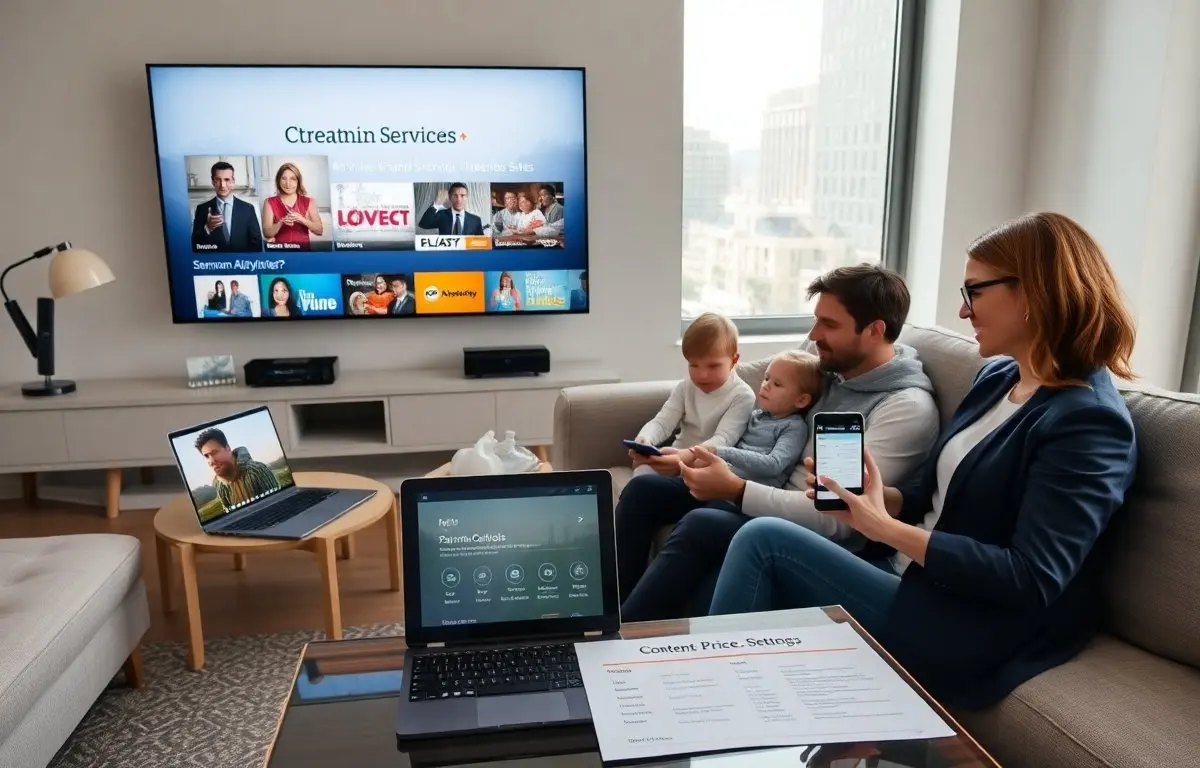
Christian streaming services now serve faith-focused viewers with an expanding range of on-demand and live content. They deliver movies, scripted and unscripted series, full sermon archives, teaching series, children’s shows, and devotional clips. The services aim to provide safe, faith-aligned content for families, churches, youth groups, and ministry leaders while adding features that make discovery, study, and group use straightforward. This article compares offerings, costs, device support, and safety features so you can pick the best christian streaming services for your household or organization in 2026.
Key Takeaways
- Christian streaming services provide faith-based movies, series, sermons, and children’s shows tailored for families and churches.
- When choosing a christian streaming service, compare content libraries, pricing, device compatibility, and safety features like parental controls.
- Many services offer free trials, parental settings, and multiple user profiles to support safe and customized viewing experiences.
- Churches benefit from group licensing options, leader resources, and the ability to share discussion guides for deeper engagement.
- Combining entertainment and teaching-focused christian streaming services can meet diverse family and church needs effectively.
- Regularly reassess subscriptions to optimize costs and ensure content aligns with evolving priorities.
What Christian Streaming Services Offer Today
Today’s christian streaming services go beyond a handful of films and sermon clips. Most platforms present a mix of long-form content (feature films, miniseries), short-form clips (daily devotionals, kids’ episodes), and live programming (church services, conferences, and special events). Libraries typically include: family-friendly entertainment that avoids explicit content; teaching series and sermon archives from denominational and independent leaders; Bible study guides and accompanying leader materials; and children’s blocks that focus on biblical stories, moral lessons, and age-appropriate animation. Many services also provide podcasts, music channels, and curated playlists designed for worship, family time, or devotions. Technical features that matter now include offline downloads for travel or mission trips, multiple user profiles with tailored viewing restrictions, and search filters by topic, book of the Bible, age group, or theme. Increasingly, platforms add community tools — discussion guides, watch-party capability, and tools for small groups — so viewers can learn and process content together. Pricing models vary from free, ad-supported tiers to monthly and annual subscriptions with ad-free catalogs, and some services support one-off rentals or purchases for specific titles. For churches, options often include group or campus licensing, sermon clip bundles, and leader resource packs to make public screening and curriculum use straightforward and compliant.
How To Choose: Content, Price, Devices, And Safety
Picking among christian streaming services is a practical exercise in aligning content, cost, and technical fit with your household or ministry needs. Start by defining priorities: are you looking primarily for family entertainment, children’s discipleship content, sermon archives for personal study, or resources for a youth group or small group curriculum? Evaluate library depth and variety — does the service offer both contemporary and classic films, short-form devotionals, and a robust teaching catalog? For children, confirm age categories, curriculum-aligned series, and faith formation resources. On price, compare subscription tiers, trial periods, cancellation policies, and whether multiple devices or simultaneous streams are included. Device support is crucial: verify apps for smart TVs (Roku, Apple TV, Amazon Fire), phones (iOS/Android), web browsers, and casting/airplay capabilities. Also confirm how many concurrent streams are permitted and whether multiple user profiles are supported so families can keep distinct watch histories and preferences. Safety and accessibility features deserve careful review: test parental controls, PIN protection for mature content, content filters by rating or topic, closed captions, audio descriptions, and language options. If you plan to use a service for church screenings or classroom settings, check for group or campus licensing, downloadable leader guides, and any restrictions on public performance; also review terms for using clips in sermons or teaching sessions. Finally, read up-to-date user reviews and platform help documentation to assess app stability, update cadence, and customer support responsiveness — all of which affect the day-to-day experience.
Top Christian Streaming Services Compared
This section highlights types of christian streaming services and what they tend to do well so you can compare offerings at a glance. Note: specific catalog items and prices change frequently, so use these comparisons as a framework for evaluation rather than a definitive list.
- Family entertainment-focused platforms — These prioritize clean, family-friendly films, animations, and series suitable for children and parents. Look for robust kid sections, episode-length controls, and easy-to-use parental settings.
- Teaching- and sermon-centered platforms — These emphasize sermon libraries, Bible study series, and curriculum materials. They are useful for personal discipleship, sermon prep, and small group study; features often include search by scripture reference and downloadable discussion guides.
- Broad faith and lifestyle platforms — These mix entertainment, teaching, documentaries, and lifestyle content (podcasts, talk shows, devotional series). They can serve households that want a single service for varied needs.
- Children’s-first services — Focused on early childhood and youth, these services offer age-based navigation, short lessons, and parent dashboards to track viewing and learning outcomes.
- Church and ministry solutions — These provide group licensing, sermon clip packages, leader training resources, and often tools for congregation-wide access or campus deployment.
When comparing specific services, evaluate: catalog breadth (how many genres and formats), exclusives (original films or teaching series), device app quality, offline features, and whether there are options for churches (group accounts, licensing). Also consider the ecosystem — does the service integrate with study apps, presentation software, or church management systems? Finally, check trial availability so you can test content quality and parental controls before committing.
Practical Tips For Families, Churches, And Small Groups
Use these practical steps to get the most from christian streaming services in household and ministry contexts.
- For families: Begin with a short list of must-have content (bedtime devotionals, kids’ Bible stories, family films) and test services using free trials. Create separate profiles for kids, teens, and adults and enable PIN-protected parental controls. Schedule regular “content checks” where parents preview new series before kids watch and use watch history and recommendations to steer viewing toward wholesome options.
- For churches: Identify whether you need public performance rights, group licensing, or downloadable leader guides. If you plan to show films during services or events, choose platforms that explicitly support church use or offer specific church plans. Use teacher and sermon playlists to coordinate teaching series across small groups and provide links or clip timestamps for follow-up conversations.
- For small groups and youth ministries: Use watch parties or scheduled group streaming sessions to view a film or teaching series together, then follow up with guided discussion questions or printed leader notes. Consider platforms that allow clipping or time-stamped sharing so you can highlight specific segments during meetings.
- Cost and subscription management: Combine a lower-cost or ad-supported entertainment option with a teaching-focused subscription if budgets are tight. Track monthly costs in a simple spreadsheet, rotate services seasonally, and cancel subscriptions that go unused. Take advantage of family or annual plans when available to lower per-user cost.
- Technical best practices: Test apps on your primary devices before group use, download critical content in advance for offline situations, and ensure closed captions and audio descriptions are enabled for accessibility. Keep apps updated and maintain a short troubleshooting guide for volunteers who run media during services.
Regularly reassess your subscriptions and needs: new titles, feature improvements, and changing family or ministry priorities can make a different service a better fit over time. By matching content priorities with device support, safety features, and licensing needs, you can choose christian streaming services that serve both spiritual growth and everyday family entertainment.