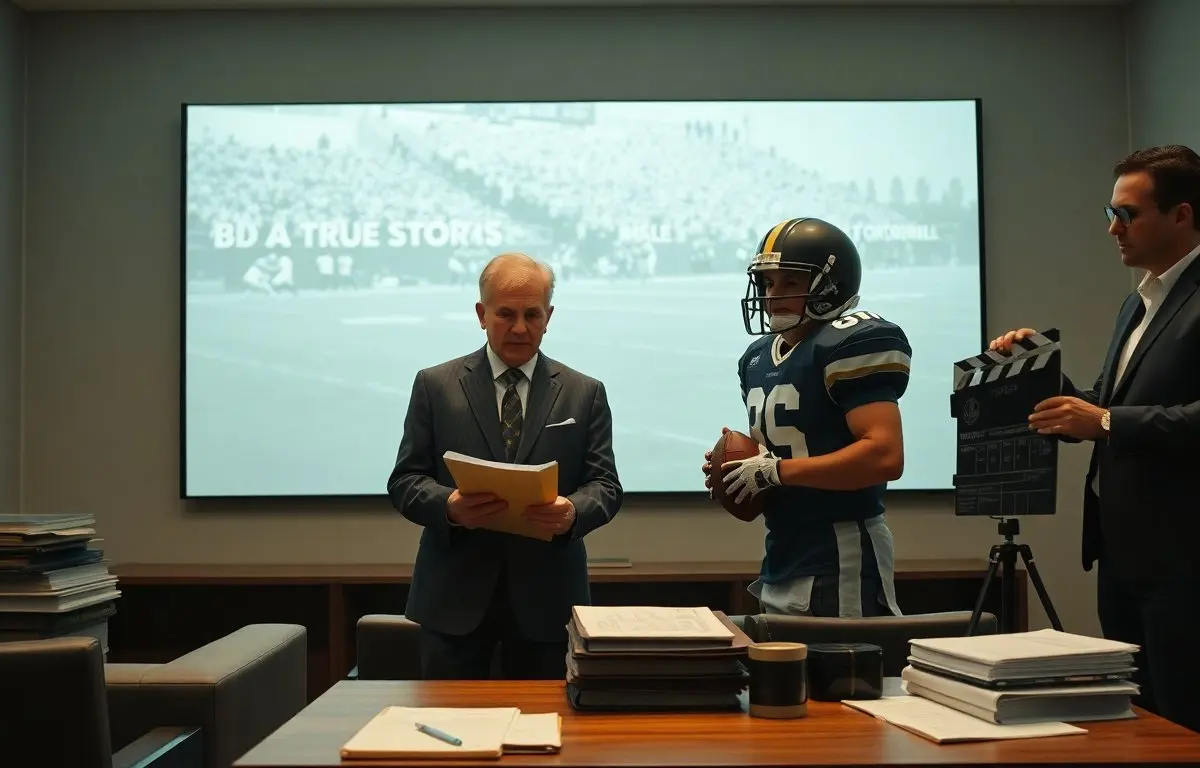
The list of football movies based on true stories helps fans find films that match real events. The guide names films, notes facts, and flags dramatized scenes. It helps readers pick films that reflect game culture and real people. It keeps focus on accuracy, performances, and social impact. The reader gains clear choices for watching and discussion. This expanded guide adds context on how to read adaptations, what to expect from different production types, and practical tips for judging a film’s faithfulness to the record.
Key Takeaways
- Football movies based on true stories blend fact and dramatization, requiring viewers to discern historical accuracy from storytelling elements.
- These films highlight notable real-life events, coaching careers, and player stories that deepen understanding of football culture and history.
- Top football biopics spotlight influential figures and pivotal moments that shape the game’s evolution and public perception.
- Lesser-known true story films offer intimate, community-focused narratives that showcase football’s social impact beyond major leagues.
- Filmmakers balance ethical storytelling with factual accuracy by consulting archives, journalists, and real-life subjects for authenticity.
- Emphasizing personal and human aspects, these movies reveal player challenges, family dynamics, and the broader significance of football beyond the sport itself.
What Defines A Football Movie ‘Based On A True Story’?
A football movie based on a true story retells events tied to real people. Filmmakers use records, interviews, and archives to shape the narrative. They may compress time, merge characters, and simplify scenes for drama. The audience must judge which scenes match reports and which scenes serve storytelling. Critics check credits, production notes, and named sources to verify claims. Viewers should expect a mix of fact and dramatization in these films.
Not every film that bills itself as “based on a true story” has the same relationship to the facts. Some are documentaries that prioritize primary-source material and contemporaneous footage; others are scripted features that use creative license to explore motive and emotion. Key indicators of a film’s approach include whether living subjects were consulted, how closely dialogue tracks reported accounts, and whether the production credits list historical consultants or archive partners.
For readers deciding what to watch, consider two simple distinctions: scope and intent. Scope refers to whether the film focuses on a single event, a season, or an entire life. Intent refers to whether the film aims to inform (documentary/reporting), to interpret (dramatic biopic), or to use a true event as a starting point for a larger fictional story. These choices affect how accurate you should expect the film to be in details like timelines, play calls, and personal relationships.
Top 7 Must‑Watch Football Films Inspired By Real Events (Brief Rundown)
The list here highlights seven films that represent different eras, topics, and tones. Each film on the list reflects a notable incident, a coaching career, a player story, or a social moment tied to football. The films range from mainstream biopics to indie releases that focus on overlooked figures. The rundown shows why each film matters for sport fans and film fans alike.
Spotlight: A Standout Biopic That Changed How We See The Game
The standout biopic centers on a high-profile coach whose life drew national attention. The film follows his early rise, his rule changes, his public battles, and his final years. Actors recreate key games with physical detail and archival shots. The film sparked debate about how truth and narrative should balance in football movies based on true stories. It renewed interest in rule history and coaching culture.
What makes a standout biopic memorable is the way it blends large-scale game sequences with intimate scenes that humanize the central figure. Cinematography often alternates between the chaos of the stadium and the quiet of a coach’s home or office, giving viewers both spectacle and context. Technical advisors and game footage are used to sell authenticity, even when dialogue or timelines are tightened for dramatic effect.
Spotlight: A Lesser‑Known True Story Worth Watching
The lesser-known film profiles a small-town player whose achievements reached a regional level. The film shows local support, the player’s training, and a pivotal game that changed community pride. It uses local interviews and game film to ground scenes. The film proves that football movies based on true stories can offer quiet, moving portraits that major releases sometimes miss.
Smaller productions often succeed by narrowing their focus: a single season, a formative relationship, or a specific social issue. That intimacy allows filmmakers to explore how football intersects with identity, race, class, or education in ways that larger productions—focused on spectacle—sometimes overlook. These films can be especially valuable for readers seeking thoughtful, character-driven stories rooted in reality.
Spotlight: A Team Underdog Story With Real Stakes
Another common category is the underdog team film based on a true event: a season, a playoff run, or an upset victory that lifted a town or program. These films emphasize teamwork, preparation, and the social context around a team’s success or failure. They show how a run of games can affect schools, local economies, and individual futures.
In these narratives, accuracy often centers on the climactic game—how plays unfolded, the score at key moments, and critical calls. Filmmakers may recreate game action with a mix of staged sequences and archival clips. Viewers interested in play-by-play fidelity should compare the film’s depiction with available game reports and, where possible, original footage.
Spotlight: Social-Impact Stories—Race, Politics, And Player Rights
Some football movies based on true stories focus less on wins and losses and more on the social issues around the sport: segregation and integration, labor disputes, or health and safety debates. These films use football as a lens to explore broader cultural conflicts and often include courtroom scenes, policy debates, or community organizing as central elements.
These titles are useful for viewers seeking to understand how the game fits into larger historical movements. They often include interviews with activists, archival news coverage, and dramatizations of turning-point moments. Accuracy here means connecting individual experiences to documented trends and public records rather than just recreating games.
How These Films Handle History, Ethics, And The Human Side Of The Game
Filmmakers choose what to show and what to omit when they adapt real events. They balance dramatic pacing with record accuracy. Editors cut hours of footage into scenes that serve character arcs. Producers sign release forms and secure rights to game footage and personal records. Writers frame ethical questions about player safety, race, and money with dialogue and scenes.
Documentary sources often inform scripted scenes. Journalists and historians advise on details such as dates, plays, and locker room practices. Actors research by meeting the real people or their families. This work helps performances feel truthful.
Specific ethical tensions arise when subjects are still living or when the film revisits traumatic events. Filmmakers must navigate consent, the dignity of subjects, and the potential consequences of re-staging painful moments. Responsible productions usually note where they have fictionalized events or where composite characters stand in for multiple real people.
Audience members must read reviews and production notes to find context. Film critics point out where a film adds or changes facts. Scholars track long-term effects when a film influences public views of an event. Practical steps viewers can take include checking end-credits for archival sources, looking for contemporaneous news reports, and reading interviews with the filmmakers about the choices they made.
Finally, the human side appears in private moments on screen. The movies show family strain, mental pressure, and community pride. These scenes help viewers relate to figures in the headlines. They turn headlines into people, and they make the games matter beyond the scoreboard.
For readers using this guide to choose a film: decide whether you want strict documentary accuracy, dramatized interpretation, or a balance of both. Consider supplementary reading after viewing—news archives, memoirs, or oral histories—to deepen your understanding of how faithful the film was to the record. By combining critical viewing with follow-up research, fans can enjoy entertainment while also appreciating the real stories behind these football movies based on true stories.