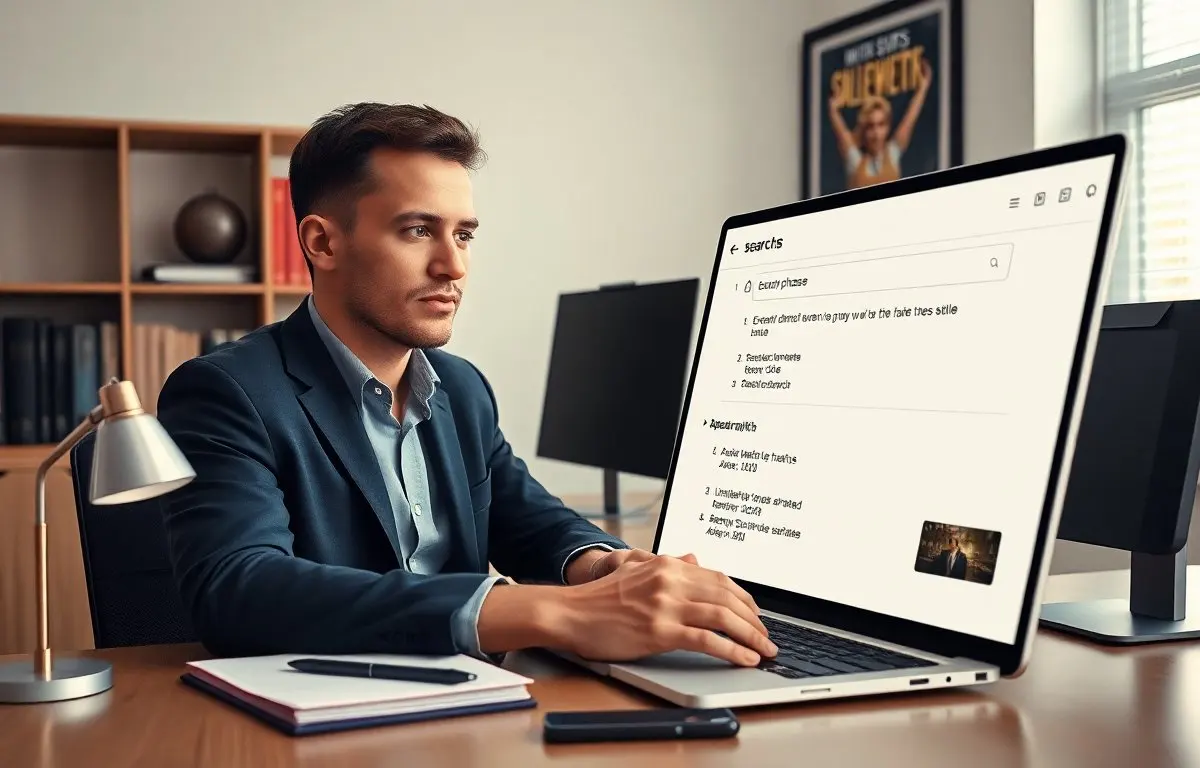
Movie quotes search helps users find exact lines from films quickly. It uses words, scene context, and metadata to return precise results. The guide explains how search engines match dialog to queries. It shows practical steps to improve results and avoid common errors. The reader will learn which tools work best and how to verify quotes accurately.
Key Takeaways
- Movie quotes search uses keywords and metadata like speaker names and timestamps to deliver precise film lines quickly.
- Including context such as character names or scene details in your query improves accuracy and reduces false matches in movie quotes search.
- Choose the best tool based on your needs: large transcript sites for speed, subtitle repositories for verification, or streaming caption search for direct video clips.
- Use exact phrases with quotes, add minimal context, and try fuzzy search to handle misquotes or variations effectively.
- Always verify quotes with primary sources like subtitle files or official scripts to ensure accuracy before publishing.
- Save and cross-check verified quotes across multiple sources to build a reliable collection and prevent errors.
How Movie Quote Search Works — Keywords, Context, And Dialog Metadata
Search engines index movie dialog and attach metadata to each line. They store speaker names, timestamps, scene tags, and film titles. A movie quotes search first matches user keywords to dialog text. Then it filters results with metadata to raise precision. Search algorithms rank lines that match full phrases higher than lines that match single words.
Systems use context windows to link nearby lines. They compare a query to contiguous dialog segments. If the system finds a close phrase, it returns that segment and shows the speaker and time. Users get better results when they include a character name, a nearby word, or a scene detail.
Databases differ by source. Some services transcribe directly from captions. Others add human-corrected transcripts. The movie quotes search quality depends on transcription accuracy and metadata depth. Automated transcripts may miss slang or muffled speech. Human-verified transcripts reduce errors but cover fewer films.
Indexing frequency also matters. New releases enter some indexes quickly and others slowly. When a user requests a recent film, the movie quotes search may return partial matches at first. Over time, indexes update and full lines appear. Services that display timestamps let users find the quote in a clip or subtitle file.
Search features vary. Exact-phrase search returns only direct matches. Fuzzy search returns similar lines and spelling variants. Boolean operators let users combine terms. Advanced filters let users limit results to a year, director, or language. These options change how the movie quotes search prioritizes results.
Best Tools And Websites For Finding Movie Quotes Quickly
Several sites excel at movie quotes search. Each site focuses on accuracy, speed, or breadth. Users should pick a site based on their needs.
- Large transcript sites. These sites host broad archives and strong search features. They index dialog by line and include speaker names. A user can paste a phrase and get direct matches. They often show full scenes and subtitle timestamps.
- Dedicated quote databases. These sites curate memorable lines and tag them by mood, topic, and character. They work well when a user remembers the tone or theme rather than exact words. The movie quotes search on these sites returns grouped variants and common misquotes.
- Subtitle repositories. These services store official subtitle files. They let users search across exact subtitle text. A user can download a subtitle file and confirm the line in context. Subtitle repositories work well for precise timestamp verification.
- Streaming-platform caption search. Some streaming platforms let users search captions inside their catalog. This approach gives the fastest path from quote to video clip for subscribers. The movie quotes search here is limited to the platform’s licensed films.
- Community forums and Q&A. Users post partial lines and ask the community for help. Community answers often identify misremembered words. These threads can guide a user when automated search fails.
Tool choice affects speed and verification. For fast lookups, a large transcript site or a streaming caption search often works best. For confirmation, subtitle repositories and human-curated quote databases offer stronger proof. Combining one fast tool with one verification source raises confidence in the result.
Practical Tips For Searching, Verifying, And Using Movie Quotes
Users should craft queries that match how transcripts record speech. They should use plain words and avoid punctuation. If a user remembers a partial phrase, they should place that phrase in quotes when the tool supports exact matching. The movie quotes search will return exact lines when users search exact phrases.
Add context to narrow results. If a user adds a character name, year, or scene detail, the system can reduce false positives. Users should add one or two context tokens, not long sentences. Too many tokens can miss the match.
Expect misquotes and variations. People often alter words when they recall lines. Users should try fuzzy search or alternate wording. The movie quotes search tools often rank the exact match highest but will list close variants below.
Verify with a primary source. After a match, users should open the subtitle file, watch the clip, or check the official script. Verification stops errors that arise from poor transcripts or user memory. When quoting for publication, users should cite the film title, year, and speaker.
Use timestamps for precision. Timestamps help readers and editors find the line quickly. They also let users check the scene for tone and delivery. If a tool provides a timestamp, users should save it alongside the quote.
Handle copyrighted material carefully. Short quotes usually fall under fair use for commentary and critique, but longer extracts may require permission. Users who publish long passages should consult copyright rules or seek permission from the rights holder.
Save favorite searches. Many sites let users bookmark matches or export subtitle snippets. Users should keep a small library of verified quotes. This habit saves time and prevents repeated searches.
Finally, cross-check multiple sources when accuracy matters. Use a transcript site, a subtitle file, and a streaming caption when possible. Multiple confirmations make the movie quotes search reliable and reduce the risk of repeating a misquote.