| Effect on pop | Supported detail | Planning use |
|---|---|---|
| Short-video traction becomes chart success | TikTok made Ravyn Lenae’s “Love Me Not” a Top 10 hit | Treat clip momentum as a release signal, not a side promotion. |
| Fans fill very large live runs | Celine Dion’s 16-show Paris residency sold out; Harry Styles planned a 30-night Madison Square Garden residency | Move early on headline residencies, because touring costs and ticket prices keep climbing. |
| Fans back events built around an artist’s values | Olivia Rodrigo’s sold-out Daisy Chain Fields festival featured an all-women lineup and raised money for women and girls’ organizations | Read artist-led events as cause-driven gatherings as well as commercial ones. |
| Artists can control their own release path | Sylvan Esso released Ow ∞ on its own label, Psychic Hotline, and returned to Spotify after a year away | Independence and platform relationships can coexist, so check where an act’s music is available. |
| Shared taste forms communities | A university humanities post describes taste communities as groups joined by a common appreciation | Use shared references to reach a fan base, knowing outsiders may miss them. |
These examples come from NPR’s pop music coverage and a university humanities post on popular music.
Pop music culture is shaped by fans who organise around artists, streaming platforms that decide how songs spread, and live shows that turn attention into events. Weigh all of these before judging a trend.
To see how these pop moments connect with the wider awards calendar, follow the hub’s award show results.
Fandoms and the trends they set
Fans work as what a university humanities post calls taste communities: groups of people joined by a common appreciation of music, film, fashion or other pursuits. A song, an artist or a lyric becomes a shared marker, and trends spread fastest where that marker is recognised. The same post shows how far this reaches. The 1992 Clinton campaign used Fleetwood Mac to speak to a fan community, and a primary-season speech by Obama referenced Jay-Z’s “Dirt Off Your Shoulder” in a way legible only to the taste community that knew the tune.
Fan loyalty also spills past the music itself. NPR reported that the San Francisco Museum of Modern Art was packed with fans when BTS frontman RM showed his personal art collection for the first time. An essay on Scandipop makes a similar point in general terms: pop stars create emotional connections that extend to dress and behaviour.
What this means in practice:
- Watch fan-led events, not only chart positions. A sold-out, artist-created festival such as Daisy Chain Fields shows what an audience will turn out for.
- Use references with a target in mind. A nod that insiders catch can build loyalty, but it will pass unnoticed by everyone else.
- Expect fan interest to follow an artist into other fields. An art exhibition can draw the same crowds as a concert hall.
Streaming, labels and release strategy
Streaming and social platforms have moved the starting point of a hit. NPR noted that TikTok made Ravyn Lenae’s “Love Me Not” a Top 10 hit, so a short-video moment can convert directly into chart standing. The Scandipop essay dates large-scale digital music consumption to the Apple iPod’s arrival in 2001, which places today’s platforms at the end of a long shift away from physical formats.
Artists also use the platforms on their own terms. In NPR’s reporting, Sylvan Esso returned to Spotify a year after pulling its music in protest, and its fifth studio album, Ow ∞, came out on 11 September 2026 on the band’s own label, Psychic Hotline. The two stories together show an act deciding where its music lives and who releases it.
- Artists: Weigh platform presence against principle, and consider a self-run label if control matters more than label support.
- Fans: Check which services carry a release before assuming it is available everywhere.
- Labels and managers: Track which clips are building momentum, since a single viral track can matter as much as a campaign.
Those platform choices feed directly into what audiences expect on stage.
Live shows and event dates
Live performance converts online attention into scheduled, ticketed moments. NPR reported that Celine Dion opened a 16-show Paris residency at the Plenitude Arena in Nanterre, outside Paris, on Saturday 12 September 2026, and that the entire series sold out. NPR also reported that Harry Styles planned a 30-night residency at Madison Square Garden, a decision framed against touring costs and concert ticket prices that keep climbing. Troye Sivan’s previous album brought his first Grammy nominations and a global tour with Charli xcx.
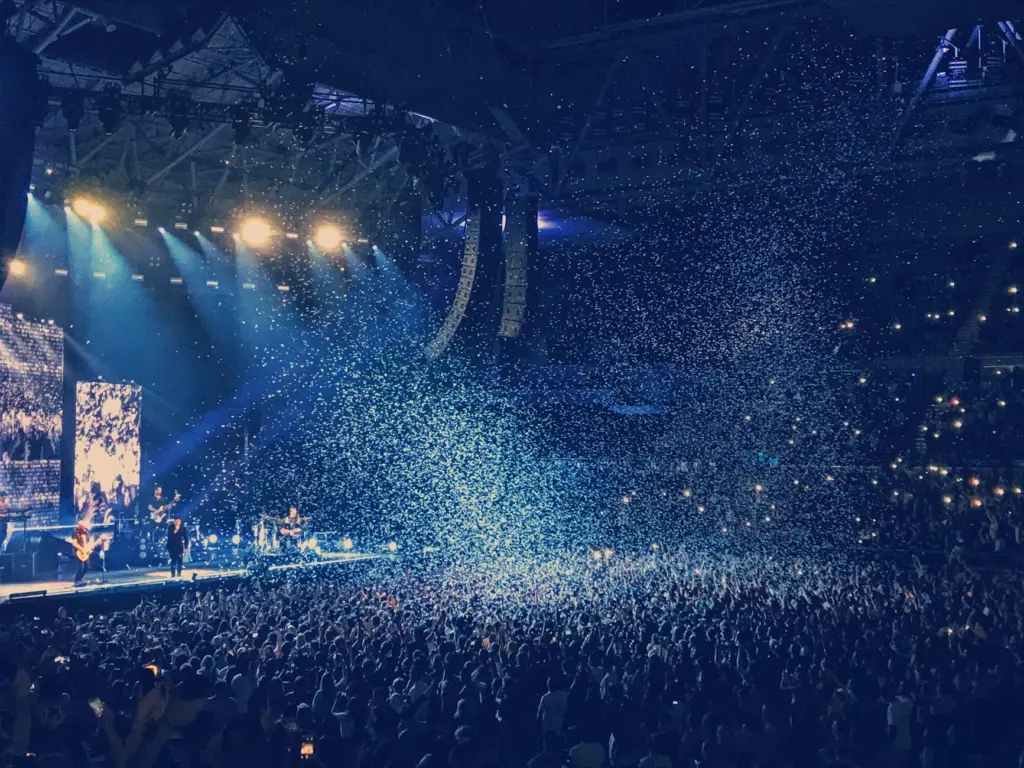
The Scandipop essay argues that shared live experiences, from a single singer in a bar to a mega-concert, bring people together. Olivia Rodrigo’s Daisy Chain Fields festival, held on 29 August 2026 in Irvine, California, shows another route: an artist-curated day with a purpose beyond the setlist.
- Fans of headline acts: Residencies with many dates still sold out in Paris, so do not wait for a later date to appear.
- Budget-conscious fans: Rising costs and ticket prices make a smaller show or festival a more realistic way to see an artist.
- Event followers: Residencies concentrate demand in one place, while a global tour spreads it across cities.
Style, music videos and production
Visual identity gives songs a recognisable look. The Scandipop essay says music video fashion is known to set shopping trends, especially among young people. That is a general claim from a blog essay, so treat it as a pattern to watch rather than a measured figure. The wider American context for these fashion and media effects is covered in American Pop Culture: How It Shapes Identity, Media, and Global Trends in 2026.
Sound is shaped just as deliberately. NPR describes Aaron Dessner as a sought-after producer for pop stars and singer-songwriters, with credits on songs and albums for Taylor Swift, Noah Kahan, Laufey, Ed Sheeran and Gracie Abrams. A producer’s name now works almost as a genre marker, and listeners follow it from one artist to another.
Fans who carry lyrics and lines between music and screen may also find Find Any Movie Quote Fast: The Smart Guide To Movie Quotes Search (2026) useful for tracing film dialogue.
Defining pop music culture
Pop culture is a contraction of “popular culture”, and, according to a retail-site explainer, what it covers is regularly debated. For pop music, a workable definition comes from what the evidence above shows: music made for wide audiences, carried by platforms and live events, and given meaning by fan communities and visual style.
Pop music was once thought transient and commercial, yet the Scandipop essay describes it as continually evolving with new trends and artists. A university lecturer quoted in the WashU post goes further, arguing that popular music is not unimportant but extremely important. Taken together, the fandom, streaming and live examples explain why: pop music culture is where taste, business and public events overlap.
Frequently asked questions
What defines pop music culture?
It combines wide-audience music with the communities, platforms, live events and visual style around it. The term itself shortens “popular culture”, and its boundaries are still debated.
How do fandoms shape pop trends?
Fans act as taste communities that recognise references, fill venues and follow artists into new areas. Examples include campaign references aimed at fan groups, sold-out fan events and crowds at RM’s museum show.
How does streaming change pop music business?
Platforms can turn a short clip into a chart hit, as TikTok did for “Love Me Not”. They also give artists leverage over where their music is available, as Sylvan Esso’s protest and return to Spotify showed.